
Skip to content 


REVENUE DRIVEN FOR OUR CLIENTS
- $6,021,182,299+
- April 27, 2026
How to Create a Landing Page Design That Guides User Choices and Boosts Conversions
Why a Good Landing Page Design is Essential in 2026
Today, a customer decides whether he wants to engage with your business or not in a matter of three seconds. In this fiercely competitive digital world, standing out from the rest of the competition is obligatory. Companies that nail landing page designs pay attention to every detail from the headline to the last pixel. They take their customer through a journey from start to finish, guiding them to conversion. According to recent SEO insights, a good conversion rate for a landing page is around 10%. Now, do you wanna be in that 10% or in the other 90%, wondering why your “CTA” button feels more like a suggestion than a decision?
If you don’t wanna end up the latter, here’s a breakdown from Corecentrix Business Solutions on what actually makes a landing page convert.
The Basics
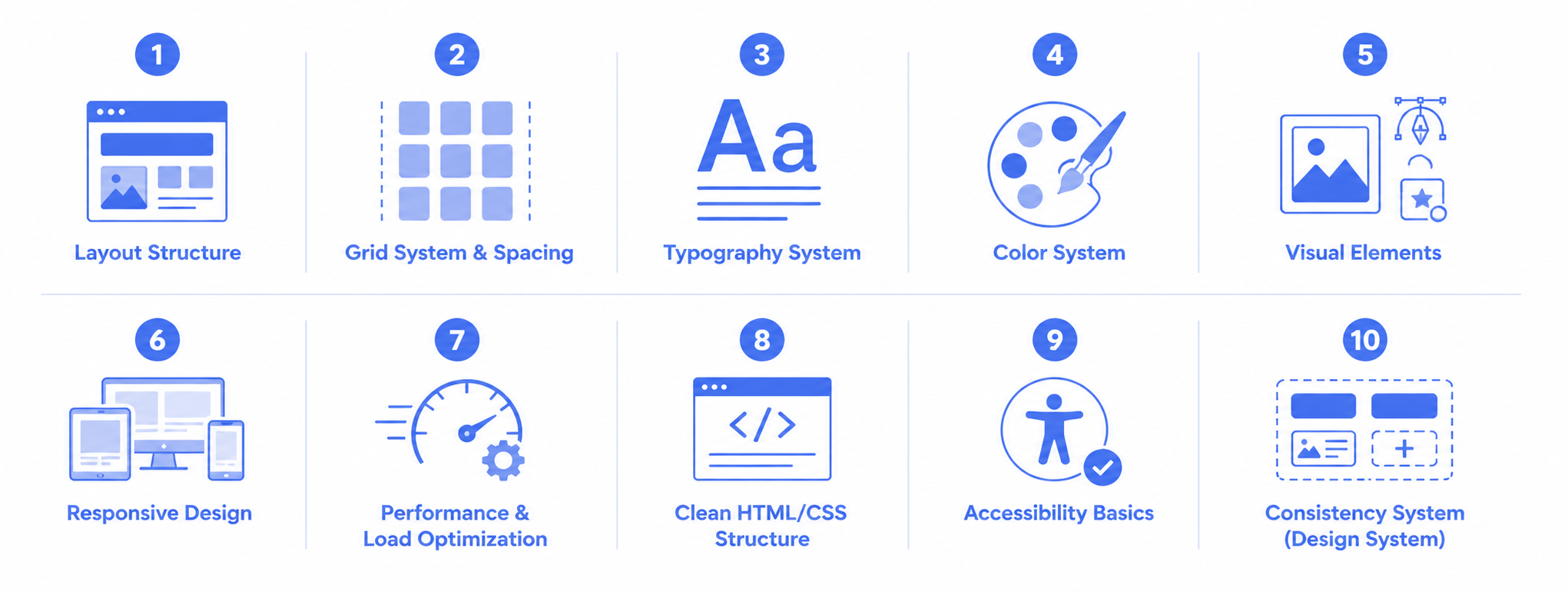
Most landing page optimization tips will tell you the technical side of things, but most rarely explain how to actually guide a user toward a decision. So if we approach purely from technical fundamentals with no conversion psychology, a landing page is made of:
1. Layout Structure
- Header – logo, sometimes navigation
- Hero section – main heading + visual
- Content sections – information blocks stacked vertically
- Footer – legal, links, contact info
2. Grid System & Spacing
- Grid system (commonly 12-column layout)
- Consistent margins and padding
- Proper alignment (left, center, or grid-based)
3. Typography System
- Font pairing (e.g., heading + body font)
- Font sizes hierarchy (H1, H2, H3, body, small text)
- Line height & letter spacing
- Consistent font weights
4. Color System
- Primary color
- Secondary color(s)
- Neutral colors (backgrounds, text)
- Contrast rules (readability)
5. Visual Elements
- Images (compressed for web)
- Icons (SVG preferred for scalability)
- Illustrations or graphics
- Dividers, shapes, backgrounds
6. Responsive Design
- Mobile-first or desktop-first approach
- Breakpoints (mobile, tablet, desktop)
- Flexible layouts (%, flexbox, grid)
- Scalable images and text
7. Performance & Load Optimization
- Image compression (WebP, optimized JPEG/PNG)
- Minified CSS/JS
- Lazy loading images
- Reduced external scripts
8. Clean HTML/CSS Structure
- Semantic HTML (section, header, footer, etc.)
- Organized CSS (classes, reusable styles)
- Avoiding inline clutter
- Maintainable code structure
9. Accessibility Basics
- Readable font sizes
- Proper contrast ratios
- Alt text for images
- Keyboard-friendly structure
10. Consistency System (Design System)
- Reusable components (buttons, cards, sections)
- Consistent spacing rules
- Defined styles across the page
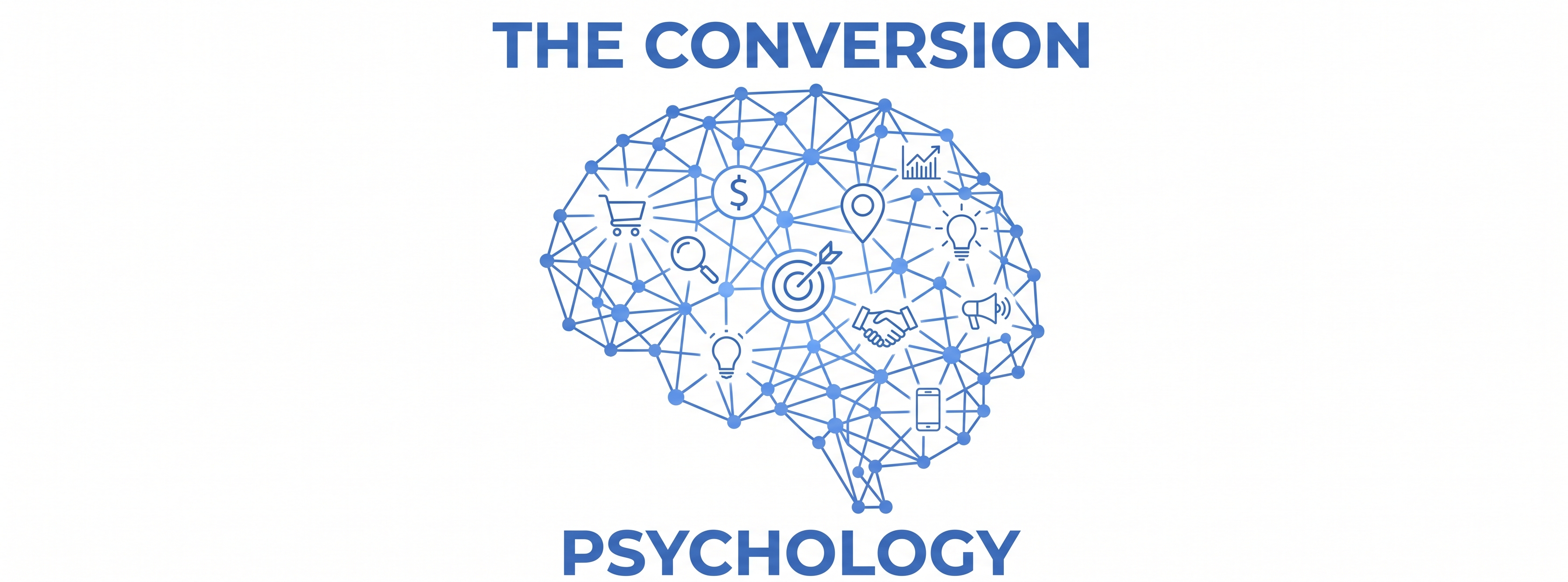
The Conversion Psychology
What drives a user to click or leave a landing page is rooted in how the brain processes cognitive load in the first few seconds of exposure. From a behavioral perspective, customers are scanning for signals that confirm whether or not the landing page is relevant to them. So, a high converting landing page design ensures that the cognitive decision trigger is implemented effectively. The user experience on landing pages can be enhanced with the messaging and trust cues that reduce uncertainty. So let’s break down the entire decision-making flow a user goes through when visiting a landing page.
The Main Headline
A headline is the most important factor in conversion focused landing pages, because it’s the first line of impression. You don’t get a second chance if it starts awkward in the first place. A high converting landing page design should always implement a headline that immediately communicates the benefit of your offering.
- Write a headline that is benefit-driven, talking about not what you do but what your customer gets out of the service.
- Ensure the headline is SMART (Specific, Measurable, Achievable, Relevant, Time-bound).
- Use numbers to make the promise concrete, such as percentages, timelines, savings, or performance improvements.
The Contextual Subheadline
Now it’s time to reinforce the same message you gave out in the main headline. Remember, you are not reiterating what you said before, but solidifying it by adding further context. Add credibility and clarity, all the while expanding on how the benefit of your service will be delivered.
- Try to make the subheadline around 15–25 words long.
- It should flow naturally and reinforce the main promise.
- Avoid unnecessary technical jargon unless the audience is highly specialized, keeping the message simple and easy to understand.
The Visual Impression
All of the conversion focused landing pages communicate with powerful visuals. With short form content taking over the world, visuals influence establishes understanding much faster than text. So, a great way to improve user experience on landing pages is by using visuals that can cater to people’s attention span.
- Videos can boost engagement significantly, but it must stay short (30–90 seconds).
- Generic stock images reduce trust. Real people, real teams, and real customers build stronger credibility.
- Use product photos for e-commerce (in real use), illustrations for abstract services or SaaS, and emotional customer photos for the strongest impact.
The Unique Value Proposition
One of the best landing page optimization tips we will provide you is that you should always highlight what you have to offer that your competitors can’t. Now this doesn’t literally mean saying “hey we are better, others are not”. The point is to showcase what sets you apart in a competitive market.
- Ask yourself clear positioning questions and what makes you indispensable.
- Your USP should be specific, measurable, and meaningful to the customer, not vague claims you can’t fufill.
- Avoid broad phrases like “best service” instead focus on concrete proof-based promises.
The Overview Section
Take three to four strengths of yours and tie them to the benefit. Make sure each of them are clear and specific about what they are offering.
- Use bullet points to make information easy to scan.
- Start each point with a strong action or outcome (e.g., “Save 6 hours per week” instead of vague labels like “Time savings”).
- Use lists to clearly separate what’s included, highlight key benefits, and differentiate your solution from alternatives.
The Social Proof
Psychological triggers in marketing are when decisions are solidified. If the claims have been made, but you have nothing to show for it, it can increase people’s skepticism. Your social proof reduces doubt by showing that real people have already trusted you.
- Customer testimonials and case studies should tell a clear transformation story and guarantee reduce perceived risk.
- Client logos, reviews, and ratings provide instant trust signals. Limit logos to up to 12 strong brands only and highlight quantified ratings (e.g., 4.5/5 from 1,479 reviews) from trusted third-party platforms
- Security badges and guarantees reduce perceived risk, with elements like SSL, compliance certifications, or clear refund policies.
The Call To Action
Your CTA is where the persuasion finally reaches its goal. A call to action placement strategy is what decides whether all that effort was even worth something or not. The goal is to make the customer’s final decision natural.
- Urgency, benefit, and simplicity work together.
- CTA design matters because buttons should clearly stand out in color and size (atleast 30% larger than other buttons) and be placed multiple times across the page.
- Strong CTA copy uses action-driven, first-person language like while maintaining a clear visual hierarchy between primary and secondary actions.
In Conclusion
A strong landing page isn’t just about how you design it. If it communicates and smoothly guides the user, then you can be confident you will make a visitor stay. Every call to action placement strategy should not feel like information but direction.
If you’re looking to improve how your landing pages perform without overcomplicating the process, Corecentrix can help you build landing pages that are structured and designed with intent from the ground up.
Related Aricles
1,345,948+
LEADS DRIVEN
FOR CLIENTS
$12,482,491+
REVENUE
GENERATED
1000+
EXPERTS ALL OVER THE STATES
500+
ON-GROUND
STAFF
Discover how we can help your business grow
We are a full service marketing & development company, working all over USA with top businesses.
80 Orville Drive, Suite 100, Bohemia, NY, 11716
